Buyer guide
Wheel care in Phoenix: brake dust, heat and when wheels-off coating makes sense
Brake dust is hot, abrasive iron and friction-material residue that bakes onto wheels, and Phoenix heat makes it harder to release. Careful regular washing handles most of it. Wheels-off ceramic coating makes sense when you want every face, including the inside of the barrel, protected and easier to clean. It does not repair damaged wheels.
11 Mile Detail Co · 5 minute read
Questions this guide answers
What does brake dust do to wheels in Phoenix heat?
Can a regular wash remove brake dust?
What does wheels-off ceramic coating include?
When is wheels-off coating worth it?
Where is wheels-off coating done, and what does it cost?
What can wheel coating not fix?
How should coated wheels be washed in Phoenix?
What does brake dust do to wheels in Phoenix heat?
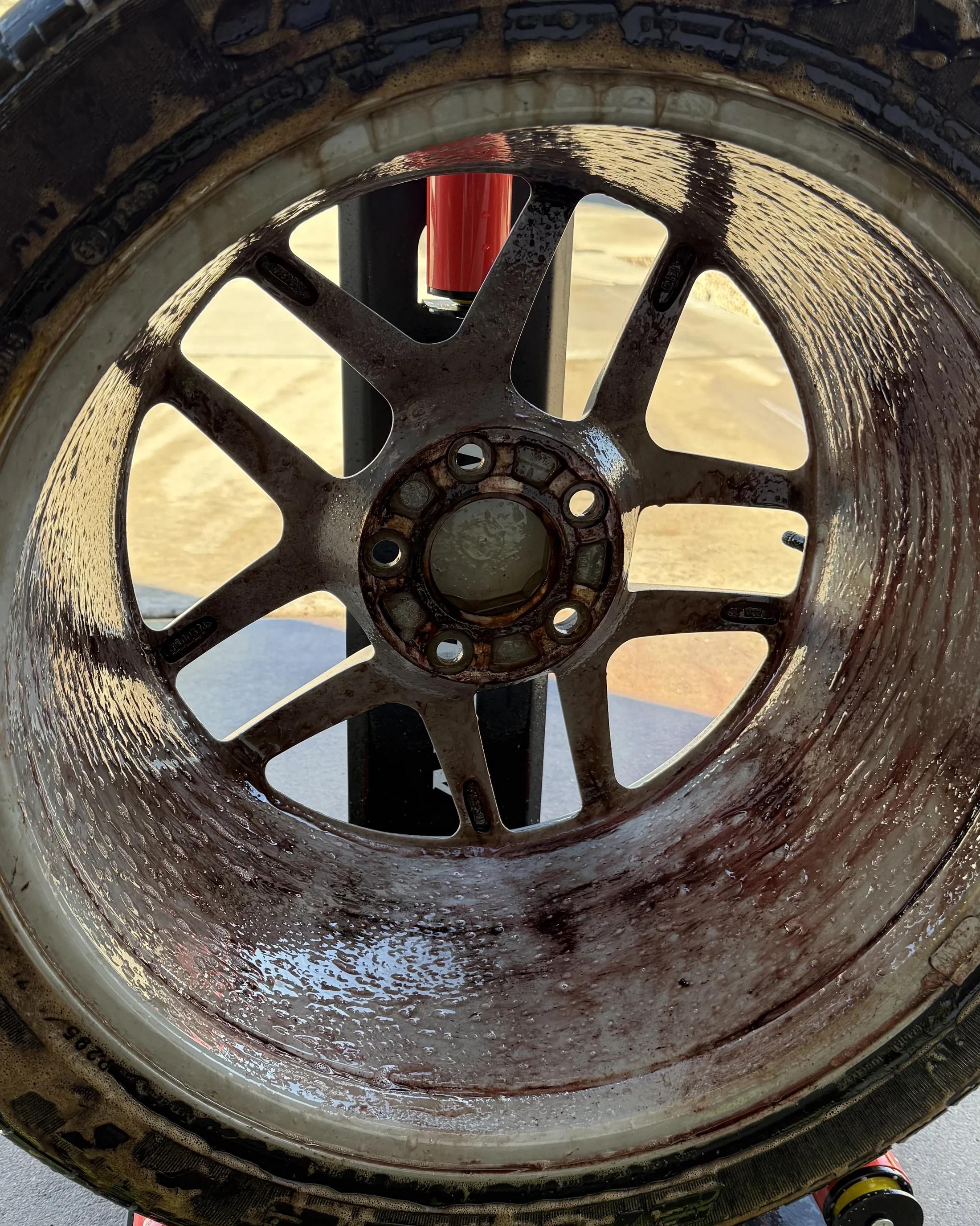
Every stop sheds fine particles from the pads and rotors. On most vehicles, much of that dust is iron, and it leaves the brakes hot enough to stick to the wheel finish. Left in place, it bonds more firmly with each heat cycle, and moisture from sprinklers or a monsoon rinse can turn embedded iron into small orange specks. Phoenix summer adds radiant heat from the pavement and wheels that rarely cool fully on a long drive. The visible result is a dull gray film that ordinary soap leaves behind, heaviest on the inside of the barrel and around the spokes nearest the caliper.
Pads and rotors keep shedding, and the coating only changes how readily the dust lets go, so a coated wheel still needs regular washing.
Can a regular wash remove brake dust?
A careful wash removes the loose layer. Bonded dust needs more than soap and a sponge, and the useful way to think about it is four levers: time, temperature, chemistry and mechanical action. A dedicated wheel cleaner or iron remover supplies the chemistry, dwell time lets it work, a cool wheel keeps it from drying on the surface, and soft brushes sized for the barrel and lug area supply the agitation. Weakening one lever means leaning harder on another, which is how owners end up scrubbing with stiff brushes or harsh acids. A Complete Detail includes cleaning the wheels, tires and accessible wheel wells, but with a wheel mounted, the back of the barrel is only partly reachable.
What does wheels-off ceramic coating include?
We remove the wheels so nothing stays hidden behind the spokes or the caliper. Each wheel is cleaned and decontaminated off the vehicle, then coated on every face, including the inside of the barrel, where brake dust collects most heavily. The coating cures before the wheels go back on, and they are reinstalled to torque spec. The coating is a protective layer over a sound finish. Its job is to help dust and grime release during washing, so routine cleaning takes less chemistry and less scrubbing.
When is wheels-off coating worth it?
It is booked as an add-on to a Ceramic Coating or Paint Correction appointment rather than on its own. It earns its cost when the wheels will be kept and cleaned often, and when the finish is worth protecting. Large or intricate wheels with deep barrels, performance brakes that shed heavy dust, and vehicles already getting a studio paint coating are the usual fits, because the wheels then match the care going into the paint. The case is weaker for a vehicle you plan to sell soon or wheels that already need refinishing, and weaker still if the car will keep going through brush tunnel washes. If the concern is a single dirty set before an event or sale, a thorough wheel cleaning during a Complete Detail may be the honest answer.
Where is wheels-off coating done, and what does it cost?
Published Wheels-Off Ceramic Coating pricing starts at $399 for a car, $459 for midsize and $519 for full-size. It is studio work, because removing wheels and letting a coating cure call for a controlled space. On-site work is considered only for collections kept in a temperature- and humidity-controlled garage or shop with enough working space. Studio visits are drop-off only. When you request a quote, tell us the wheel size and design, the brakes if you know them, and any curb damage, so the proposal reflects the real condition of the set.
What can wheel coating not fix?
A coating goes over whatever finish the wheel already has. Curb rash, gouges, bent rims, peeling clear coat, corrosion under the paint and pitting on chrome or polished aluminum stay as they are under a coating. Those need a wheel repair or refinishing shop first, and coating makes sense after the repaired finish has cured. Brake dust keeps landing, too. Pads and rotors keep shedding, and the coating only changes how readily the dust lets go, so a coated wheel still needs regular washing. If a wheel already has damage, mention it in your quote request so repair can be planned before any coating.
How should coated wheels be washed in Phoenix?
Let wheels cool to the touch before washing them. Rinse first to lift loose dust, then use a pH-neutral, coating-safe wheel cleaner with soft brushes and mitts kept only for wheels, so brake grit never reaches the paint. Clean the barrel, the spokes and the lug area, rinse thoroughly and dry each wheel so hard water does not spot it. Skip strong acid cleaners and stiff brushes, which wear a coating sooner. If dust starts clinging again after a proper wash, ask about a condition check.
Want honest eyes on your paint?
The assessment is free and the quote follows the paint. No obligation either way.
Related buyer guides
- Buyer guideCeramic coating in Phoenix heatCeramic coating helps against Phoenix UV, spotting, and wash wear. Shade, wash habits, and maintenance still decide how long it holds.
- Buyer guidePaint correction vs ceramic coatingPaint correction removes swirls and haze from the clear coat. Ceramic coating protects that finish. In Phoenix sun, correct first if defects show, then coat.
- Buyer guideWhat detailing can and cannot fixDetailing can clean and improve light defects. It cannot repair deep scratches, failed clear coat, or body damage. Start here before you request a quote.