Buyer guide
What detailing can and cannot fix
Detailing can remove bonded contamination, recover many interior stains, reduce some odors, and improve light clear-coat defects. It cannot replace missing paint, rebuild failed clear coat, repair cracked materials, or solve mechanical damage. The useful question is not whether a detail can help, but which layer of the vehicle is actually damaged.
11 Mile Detail Co · 4 minute read
Questions this guide answers
Can detailing remove scratches?
Can detailing remove odors and stains?
Can detailing fix oxidation or failed clear coat?
What can a Complete Detail improve without paint correction?
When is a detail the wrong first service?
How should I describe damage when requesting a quote?
Can detailing remove scratches?
Scratch removal depends on where the defect stops. A mark in contamination or transfer sitting on top of the paint may clean away during decontamination. Swirls, wash marring, and some light scratches within the clear coat can often be reduced through machine polishing. An Enhancement aims at roughly 50–70% of light defects; a two-stage Correction targets roughly 85–95% when the paint has enough safe material to work with. A scratch that catches a fingernail may still be correctable, but that test is only a clue, not a diagnosis. If color coat, primer, or bare material is visible, polishing cannot put paint back. That becomes touch-up or body-shop work, followed by detailing after the repair has cured.
In those cases, the right path is repair first, then detail or protection after the surface is stable.
Can detailing remove odors and stains?
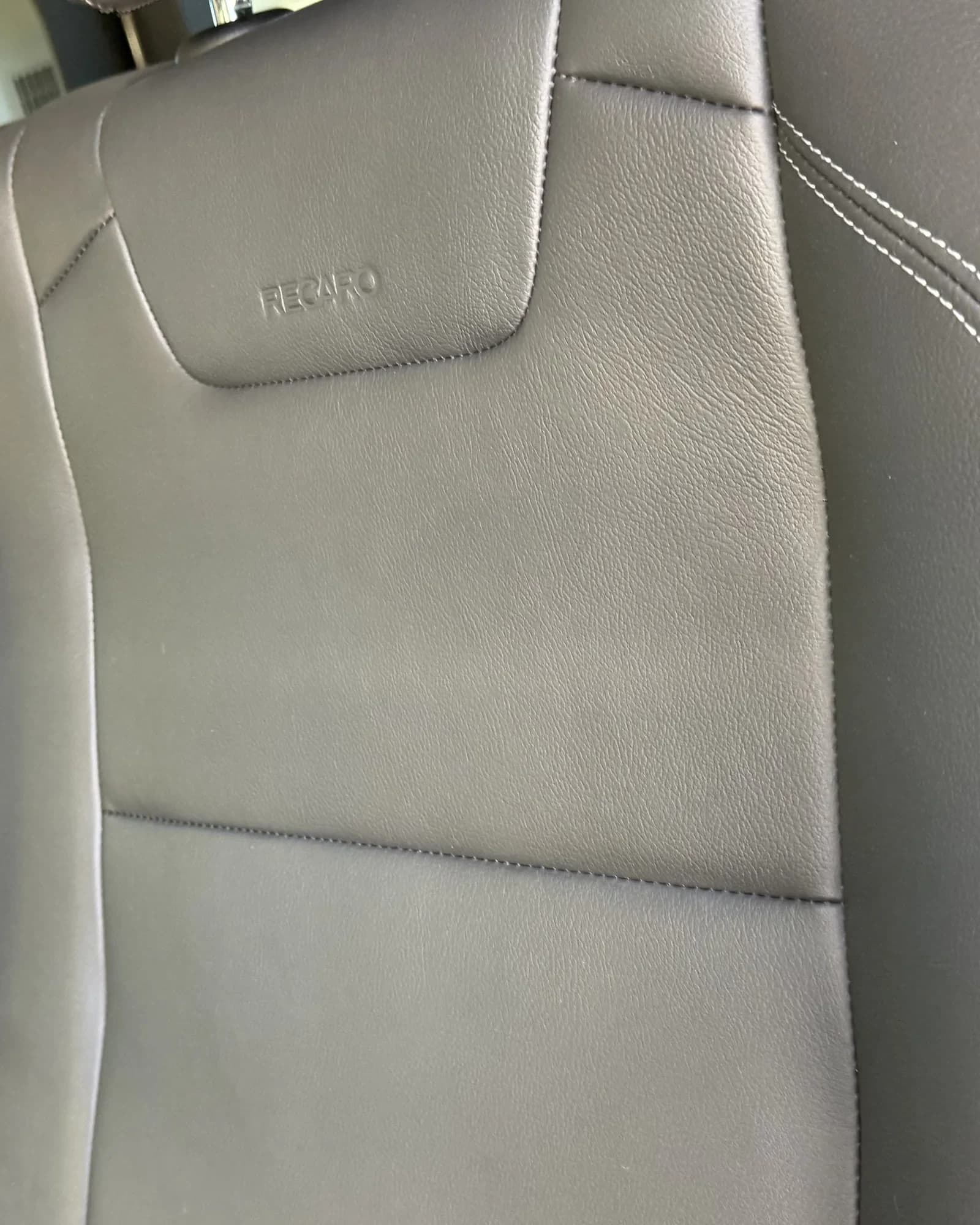
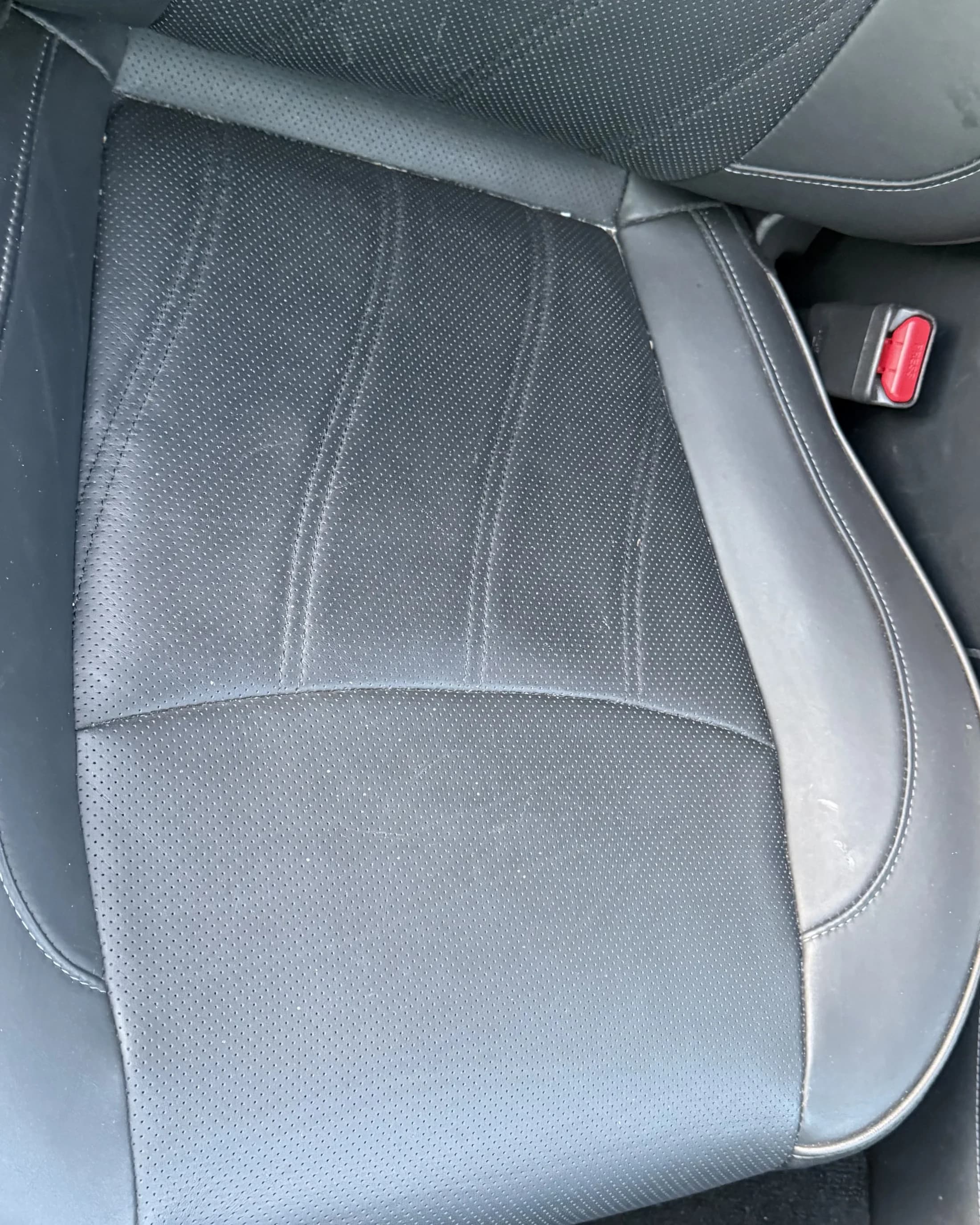
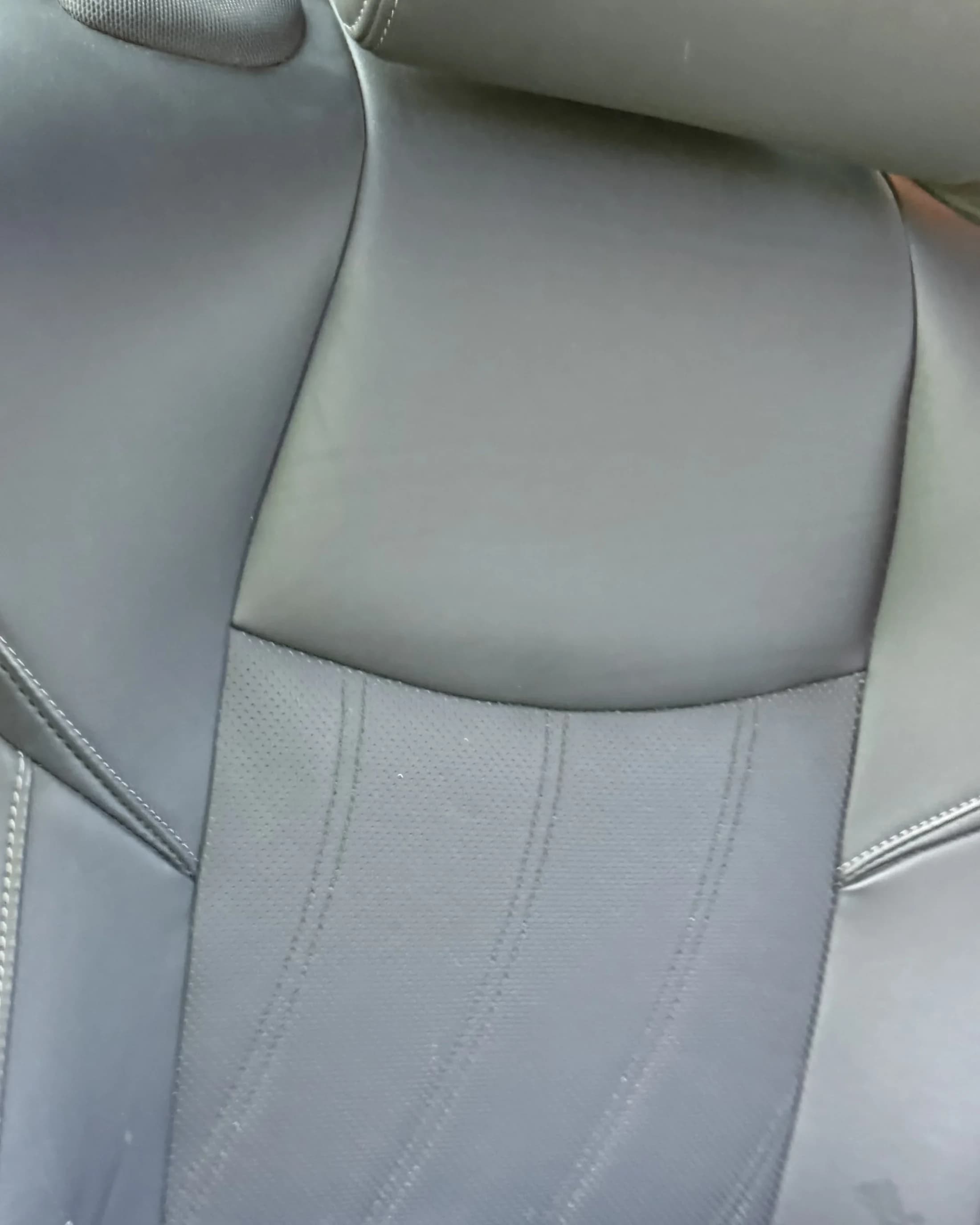
Vacuuming, steam, and hot-water extraction can remove loose soil and many water-based spills from carpet and upholstery. The limit is the material and the source. Dye transfer, bleach marks, sun-faded leather, and stains that chemically changed a fiber may remain after the contamination is gone. Odor work has the same rule: removing a spill from carpet is different from smoke that has reached the headliner, HVAC system, and seat foam. Mold or active water intrusion needs the leak and any health concern addressed before cosmetic work begins. Photos help with scope, but strong odors and unknown stains may need an in-person look. We describe improvement honestly because fragrance over a source is not odor removal.
Can detailing fix oxidation or failed clear coat?
Oxidation is not one condition. On a headlight, surface UV damage can often be sanded away, polished back to clarity, and protected again. On automotive paint, dullness may come from contamination, wash damage, or oxidized material that responds to polishing. Clear-coat failure is different: peeling, checking, or chalky patches mean the protective film itself has broken down. A coating cannot glue that film back together, and aggressive polishing may make a thin area worse. Phoenix sun and repeated heat cycles make this distinction important on roofs, hoods, and horizontal panels. We inspect the surface first. Stable paint can be cleaned, corrected, and protected; failed paint belongs with a qualified refinisher before detailing resumes.
What can a Complete Detail improve without paint correction?
A Complete Detail is a full interior and exterior reset, not a polishing package. Exterior decontamination removes iron particles, tar, and bonded grit that ordinary washing leaves behind. A two-bucket wash, wheel and wheel-well cleaning, glass work, and a protective topcoat restore a clean baseline. Inside, vacuuming, steam, extraction, and material-appropriate conditioning address accumulated soil. That work often makes a vehicle look substantially better because clean paint reflects more evenly and clean interiors stop distracting the eye. It does not level swirls or etched water spots out of the clear coat. In Phoenix, hard-water spotting may sit on the surface or bite into it; decontamination handles the first case, while the second may need correction review.
When is a detail the wrong first service?
Start elsewhere when the vehicle has active water intrusion, mold, broken glass, collision damage, peeling paint, rust repair, electrical problems, or upholstery that needs replacement rather than cleaning. A detail is also the wrong first spend when a deep scratch or dent is the buyer's only concern. Repair the failed system or material, allow fresh paint and adhesives to cure according to the repairer's instructions, then clean and protect the stable result. Emergency spills are another boundary: standing water, fuel, hazardous material, or biological contamination may require remediation equipment and safety procedures beyond normal detailing. Saying no at the right point protects the vehicle and prevents someone from paying for cosmetic work that cannot address the cause.
How should I describe damage when requesting a quote?
Send the vehicle year, model, color, storage conditions, and the result you want—not only the service name you think fits. Include a full-vehicle photo, a sunlit or LED-lit view of the paint, close-ups of scratches, and clear photos of interior problem areas. Say whether a stain is fresh or old, whether an odor returns after the vehicle sits closed, and whether any leak or repair is still active. For paint, note repaint history if you know it. For a Phoenix driveway vehicle, mention hard-water exposure, uncovered parking, and tunnel-wash use. Those details help us separate cleaning, correction, restoration, and repair before scheduling, so the quote begins with the right lane instead of an optimistic guess.
Want honest eyes on your paint?
The inspection is free and the quote follows the paint. No obligation either way.